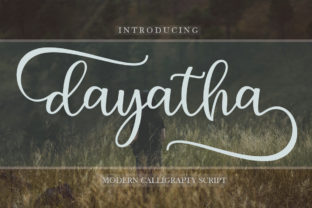
Dayatha: A Unique Calligraphy Font for Creative Expression
If you're looking for a font that adds personality and charm to your designs, Dayatha might be just what you need. This sweet calligraphy font is more than just a style—it's a tool that can elevate your projects in unexpected ways. Whether you're working on a personal project or a professional one, Dayatha offers a fresh and dynamic look that stands out.
Unlike many standard fonts, Dayatha isn't designed for minimalism or uniformity. Instead, it leans into the beauty of imperfection and fluidity. Its casual style makes it feel like it was written by hand, giving your work a warm, human touch. This quality is especially valuable when you want to convey authenticity or emotion in your design.
When and Why to Use Dayatha
There are countless situations where Dayatha can make a difference. For example, if you're creating a custom wedding invitation, this font can add a sense of elegance and intimacy that other fonts might not. It works well with romantic themes, making it a popular choice among couples who want their special day to feel unique.
Entrepreneurs and small business owners often use Dayatha for branding. A logo that features this font can stand out in a crowded market. It gives a brand a friendly, approachable vibe without sacrificing sophistication. Think of a boutique coffee shop or an independent bookstore—both could benefit from a font that feels personal and inviting.
For bloggers and content creators, Dayatha can be a great addition to headers or captions. It adds visual interest to social media posts or blog titles, helping your content catch the eye of your audience. Imagine using it for a post about self-care or mindfulness—its soft curves and flowing lines can reinforce the message of relaxation and calm.
Real-World Applications of Dayatha
Let’s consider a few specific scenarios where Dayatha can shine. If you’re designing a greeting card for a friend’s birthday, this font can bring a personal touch that makes the card feel more heartfelt. It’s perfect for handwritten-style messages, as it mimics the way someone might write a note with a pen.
Another common use case is in digital marketing. Email newsletters, promotional banners, or even social media ads can benefit from the unique look of Dayatha. It helps your message stand out while maintaining a professional appearance. For instance, a fitness coach might use it in a post about motivation, adding a bit of flair that resonates with their audience.
Teachers and educators can also find value in Dayatha. Using it for classroom materials, such as handouts or bulletin boards, can make learning more engaging. It adds a creative element that can help students connect with the content in a different way. Imagine a teacher using it for a poetry unit—its artistic style can inspire students to think more creatively about language and expression.
Who Can Benefit from Dayatha?
Dayatha isn’t just for designers or artists. Anyone who wants to add a personal touch to their work can benefit from it. Freelancers, for instance, might use it in their portfolio websites to showcase their creativity. It can differentiate their work from others and give potential clients a sense of their unique style.
Small business owners, especially those in the lifestyle or wellness industries, can use Dayatha to create branded materials that feel authentic. A yoga studio might use it for signage or social media posts, reinforcing the idea of peace and balance. Similarly, a skincare brand could use it in product packaging to evoke a sense of care and attention to detail.
Even everyday users can find practical applications for Dayatha. If you're planning a DIY project, like making custom stationery or photo frames, this font can add a unique flair. It’s also useful for personal projects, such as creating a journal or a scrapbook, where individuality is key.
Things to Consider Before Using Dayatha
Before diving into using Dayatha, it’s important to consider a few factors. First, think about the context in which you’ll be using it. While it’s beautiful in many settings, it may not be the best choice for formal documents or highly technical content. In those cases, a more traditional font might be more appropriate.
Also, consider the readability of the font. While its casual style is appealing, it may not be ideal for long blocks of text. It works best when used sparingly, such as in headings, titles, or short phrases. If you're using it in a larger piece, make sure it doesn’t compromise legibility.
Finally, think about the platform or software you'll be using. Not all design tools support every font, so it's a good idea to check compatibility before downloading or purchasing. Many online platforms offer free trials or samples, which can help you test how Dayatha looks in your specific project.
How to Get Started with Dayatha
Getting started with Dayatha is straightforward. You can find it on various font marketplaces, where it’s often available for purchase or download. Some sites offer free versions, while others require a small fee for commercial use. Always read the licensing terms carefully to ensure you’re using the font correctly.
Once you have it installed, experiment with different sizes and styles to see what works best for your project. Pairing it with other fonts can also enhance the overall design. For example, combining Dayatha with a clean sans-serif font can create a balanced and modern look.
Remember, the goal is to use Dayatha in a way that enhances your message, not distracts from it. Whether you're creating a logo, a social media post, or a personal project, this font has the potential to add a unique and memorable touch to your work.